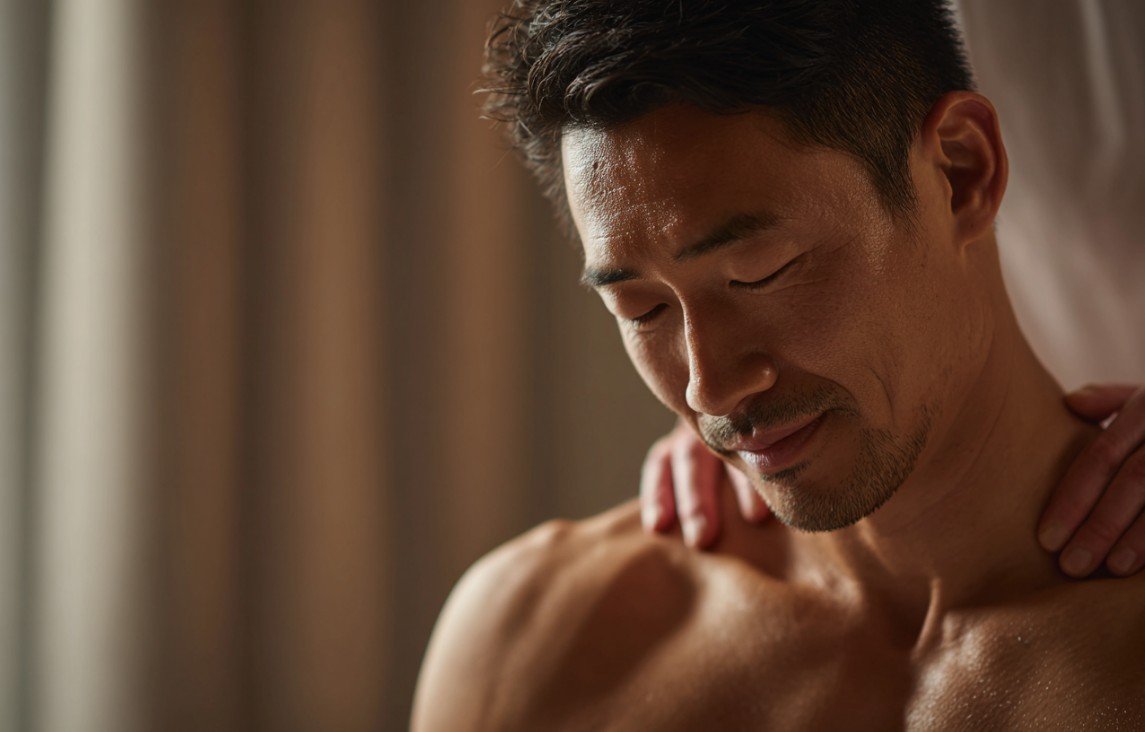

This response is not just emotional. It is also biological.
When the body experiences safe and calming touch, the nervous system begins to slow down. Muscles relax, breathing becomes deeper, and the body gradually shifts out of a stress state. This is partly because touch helps reduce cortisol, the hormone linked to stress, while encouraging the release of oxytocin, often associated with feelings of calm and connection.
Massage is one of the clearest examples of how the body reacts to touch. Through steady pressure and rhythmic movement, massage helps increase blood circulation and reduce tension in the muscles. Areas that have been tight from stress, long hours of sitting, or physical activity slowly begin to loosen.

Touch also helps bring attention back to the body. In daily life, many people spend most of their time focused on screens, work, or responsibilities. Moments of physical relaxation remind the body to slow down and reconnect with itself.
For many people, the benefits are both physical and mental. A good massage can ease muscle discomfort, improve sleep, and create a sense of calm that lasts long after the session ends.

In a world that moves quickly, the body often carries tension without us realising it. Sometimes, the simplest way to help it reset is through something as basic and human as touch.